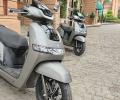
India's electric two-wheeler market has seen record penetration, exceeding 11.2 per cent, driven by crude oil price fluctuations. This surge has led to an unexpected crisis for Indian OEMs, with unfulfilled customer demand reaching 20-30 per cent and average waiting periods exceeding four weeks, a situation expected to intensify during the upcoming festival season.

September marked India's highest-ever monthly EV retail volume. More than one in nine two-wheelers retailed in September was electric.

TVS Motor Company has emerged as India's largest two-wheeler manufacturer by total sales volume in June 2026, surpassing long-standing leaders Hero MotoCorp and Honda Motorcycle & Scooter India, primarily driven by its strong international business performance.
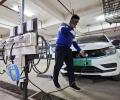
Electric vehicle (EV) sales in India are growing faster than the industry's ability to produce and deliver them, leading to supply shortages at dealerships during the peak festival season. This surge in demand is attributed to rising conventional fuel prices, making EVs a more attractive option for cost-conscious buyers.

Electric vehicle retail sales in India reached a new monthly record of 3,27,901 units in July, marking a 66 per cent increase over the previous year, with nearly one in eight vehicles retailed now being electric.

India's leading two-wheeler manufacturers, including TVS Motor, Bajaj Auto, and Hero MotoCorp, are preparing for a deceleration in growth during the second half of financial year 2026-27 (H2FY27). This anticipated slowdown is attributed to a high base effect from last year's GST rate cut, inconsistent rural demand, and a growing disparity between premium and entry-level segments.

Indian automobile retail sales reached a record 25,36,920 units in September, marking a 31.82 per cent year-on-year growth, with passenger vehicles recording their highest-ever September sales at 4,27,213 units, according to the Federation of Indian Automobile Dealers (FADA).
Indian two-wheeler buyers are increasingly opting for feature-rich, higher-end variants and premium motorcycles, driven by technology, safety, and easier access to finance, according to TVS Motor Company. The company is also exploring alternative electric motor technologies to secure its supply chain amidst growing EV penetration.
TVS Motor Company reported a significant 56.8 per cent year-on-year increase in net profit to 1,036 crore in Q1FY27, driven by record sales volumes, an improved product mix, and robust demand in both domestic and international markets, with management anticipating continued double-digit industry growth.
India's electric vehicle market achieved a significant milestone in June 2026, accounting for over 12% of total vehicle retail sales for the first time. This growth, driven by strong demand across electric two-wheelers, passenger vehicles, and commercial vehicles, saw overall EV retail sales surge by 63% year-on-year to a record 306,220 units, indicating a mainstream shift in mobility.

Shriram Finance, a leading Indian NBFC, is aggressively expanding its gold loan and electric vehicle (EV) financing segments, targeting a Rs 20,000 crore gold loan portfolio within two years and expecting significant growth in EV disbursements.

Retail sales of electric passenger vehicles (ePVs) nearly doubled in July 2025, surging 93 per cent year-on-year (Y-o-Y) to 15,528 units, even as overall passenger vehicle (PV) retail volumes declined marginally. In contrast, electric two-wheeler (e2W) sales dropped by 4.3 per cent to 102,973 units, according to the Federation of Automobile Dealers Associations (Fada) data.
The Delhi government has approved an ambitious electric vehicle policy that eliminates registration fees and road taxes for EVs priced up to Rs 30 lakh, offers a Rs 1 lakh incentive for purchasing new EVs while scrapping old vehicles, and mandates that only electric two-wheelers can be registered starting April 2028.
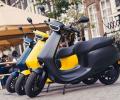
Electric two-wheelers have zipped past the half-a-million registration mark and achieved a market penetration of 4 per cent at the fag end of Calendar 2022, according to data released by VAHAN. According to VAHAN data for the year (until December 27), 560,000 two-wheelers were registered in the country, up a staggering fourfold over 2021, when only 136,000 were registered, and when electric vehicle penetration was a mere 1.05 per cent. The total number of two-wheelers (internal combustion engine, or ICE, and electric) registered so far in 2022 stands at 14.5 million, up only 12.7 per cent over the previous calendar year.

India's automobile retail sales reached an unprecedented 24.23 lakh units in August, marking a 17.51 per cent year-on-year growth, with alternative fuels (CNG, hybrid, and electric) collectively surpassing petrol in the passenger vehicle segment for the first time.

While charger deployment is yet to begin, the scheme has supported the sale of 2.65 million EVs as of July 22.
Bajaj Auto received the highest incentive payout under the government's Production-Linked Incentive (PLI) scheme for automobiles and auto components in FY26, securing approximately 625.65 crore. Despite exceeding investment targets, the scheme has significantly underperformed in job creation and incremental sales, generating only 46% of projected jobs and 23% of targeted sales by March 2026.

Electric vehicle (EV) retail sales surged 16.37 per cent year-on-year to 22,70,107 units in 2025, driven by a 77 per cent jump in electric passenger car sales, according to data released by dealers' body FADA on Wednesday. The EV makers had recorded a total sales of 19,50,727 units in 2024, the Federation of Automobile Dealers' Association (FADA) said.

Total automobile retail sales in India surged by 25.89 per cent year-on-year to 25,91,138 units in July, driven by GST rationalisation, ease of retail finance, and favourable festival timing, according to the Federation of Automobile Dealers Associations (FADA). This marks the first time all vehicle categories recorded their best-ever July sales.
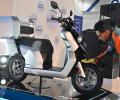
India's electric two-wheeler (E2W) sector is expected to cross the one million mark in 2024 fuelled by rising demand, increased production, and affordability, industry experts said, even as several original equipment makers are expanding their penetration to rural areas. Improved battery technology and innovative features are also likely to fuel growth, they said. "E2W sales will breach the 1-million mark in 2024 as the demand for electric two-wheelers is expected to continue growing due to factors such as environmental awareness, government incentives, and improvements in technology," Hyder Khan, chief executive officer (CEO), Godawari Electric Motors, said.
India's electric vehicle (EV) markets expanded gains in January compared to the year-ago period, as two-wheeler and passenger vehicle sales triggered a shuffle in the competitive landscape, data from an automobile dealers' association showed.

India's automobile retail sales surged by 21.83 per cent year-on-year in June, reaching 25,57,234 units, marking the best June ever recorded across all segments, according to the Federation of Automobile Dealers Associations (FADA).
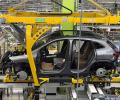
India's total automobile retail sales recorded a significant 9.55 per cent year-on-year growth in May, reaching an all-time high of 25,31,067 units, driven by strong performances in three-wheelers, passenger vehicles, and tractors, despite prevailing heatwave conditions and fuel price pressures.

Automobile dealers in India are reporting healthy bookings ahead of Navratri and Dussehra, with the Federation of Automobile Dealers Associations (Fada) indicating strong confidence in a pickup in deliveries from mid-October, despite a high base from last year's GST-led surge.

Major two-wheeler (2W) manufacturers in India witnessed a single-digit decline in domestic sales in November after dispatches had picked up in October for the festive season when wholesales went up by 14 per cent and retail also grew by 36 per cent.

India's electric vehicle market is experiencing an unprecedented boom with a 37 per cent increase in new entrants, driven by supportive policies and infrastructure.

Fuel prices have risen by about Rs 7.5 per litre since May 15, as global crude oil prices surged due to the ongoing conflict in West Asia and supply concerns around the Strait of Hormuz.

Bajaj Auto has virtually closed the gap with Ather Energy in September, notching up 6423 EV registrations compared to 6466 registrations by Ather.
Passenger vehicle (PV) sales growth in India is expected to moderate to 3-5 per cent year-on-year (Y-o-Y) in financial year 2027 (FY27) due to a high base and preponed replacement demand, according to a report released by India Ratings and Research on Thursday.

While GST on ICE vehicles was brought down significantly, for electric cars it remained at 5 per cent.

Major two-wheeler manufacturers in India witnessed a double-digit increase in domestic sales in October, driven by the festival fervour.

Electric passenger vehicle retail sales in India surged by 81.2 per cent to 26,682 units in May, with Tata Motors leading the segment, while electric two-wheeler sales also saw a substantial 62.76 per cent increase, according to the Federation of Automobile Dealers Associations (FADA).
Kerala has overtaken more industrialised states in personal electric vehicle adoption, driven by strong middle-class uptake, policy support, and charging infrastructure.

But when it comes to e2W, China is the dominant player and had grabbed over 76 per cent share of total e2W imports in 2025 with brands like Yadea, NIU and Sunra dominating the market.

With just a month left in this financial year, electric two-wheeler sales, so far, are at just 62 per cent of the ambitious target of 1 million units set for 2022-23 by the NITI Aayog. According to VAHAN data, compiled by the Society of Manufacturers of Electric Vehicles (SMEV), 620,006 units of electric two-wheelers were sold across the country in FY23 until February 21. Though the industry may miss the 1-million target, sales in FY23 are already up 146 per cent from 249,621 units sold in FY22.
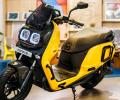
India's home-grown EV startups say the government's auto PLI scheme is helping big players while shutting out innovators building electric two- and three-wheelers from scratch.

The country saw a massive year-on-year surge in the demand for electric vehicles, with retail sales of electric two-wheelers rising by 58 per cent, passenger vehicles by 130 per cent, three-wheelers by 82 per cent, and commercial vehicles by 171 per cent in March 2023, according to the data shared by the Federation of Automobile Dealers Associations (Fada). According to a report by JMK Research, the EV segment as a whole grew by 157 per cent during FY23, to 1,180,597 units, from 458,746 units a year ago. Overall, EV sales in March 2023 rose by 82 per cent from the March 2022 figure, the JMK report added.
Bajaj Auto plans to increase its annual production capacity by nearly 25 per cent, from around 7 million to over 9 million vehicles, in the coming quarters. This expansion is driven by strong export demand and rapid growth in electric vehicles, which have stretched current capacity across key product segments.

Larsen & Toubro (L&T) is investing Rs 5,000 crore over five years to enter the automotive components sector, focusing on electric vehicle (EV) motors, safety systems, and connected-vehicle technologies, aiming to become a Tier-I auto supplier.

Why has the shift from ICE to electric slowed down despite initial enthusiasm?
